Choreopoems
What is a choreopoem?

A choreopoem is a choreographed series of poems that integrates performance poetry, dance, music, song, live art, and, if you do it Monica's way, parkour, yoga, memes, spells, video clips, sound bytes, and more. The term was coined by Ntozake Shange in 1975, with her choreopoem, For colored girls who have considered suicide / when the rainbow is enuf.
(Rest in Power, Queen Shange. We miss you and thank you for every trail you've blazed.)
The genre focuses on blending different art media on stage to articulate a complex or emotional experience. It shies away from traditional drama narrative, and instead utilizes poetry to highlight separate "rooms" of thought that all relate to a central theme.
Monica teaches WRIT 260: The Choreopoem at Susquehanna University. To request her syllabus:
FORCE
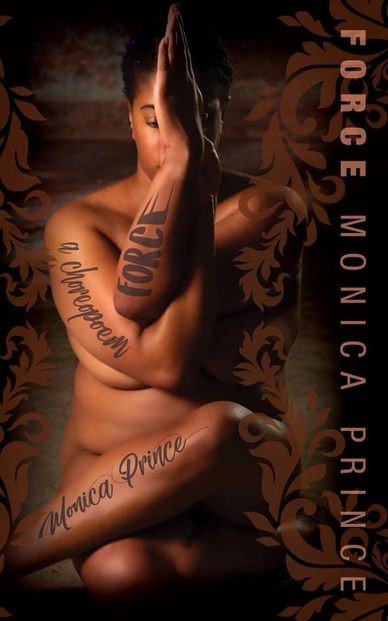
In FORCE: A Choreopoem, meet Victim, Survivor, and Whore—three Black women reeling from recent and repeated rapes, fighting through turbulent recovery journeys. Is Victim really a victim if she’s still alive? Is Survivor her only identity after multiple violations? Is Whore just a reckless survivor? FORCE interrogates if this prevailing rape culture norm is true—it’s going to happen again—and how to keep going if it’s false.
FORCE is the fifth in the Prince Choreopoem Universe, which builds on the ever-urgent question: Who is responsible for the Black woman's safety? Published by Harbor Editions in January 2026, this choreopoem chronicles the force that takes away agency and the force to stay alive after.
Photo/cover design: Monica Prince, Steve Gibson, & Hercules Platts
For script and performance rights:
Roadmap

In this radical twenty-first century choreopoem, Dorian, a young American Black man, is tasked by an ancestral spirit to thwart his inevitable murder. He traces his family tree, from his grandmother to his offspring, uncovering secrets of sex work, self-harm, and assault alongside snapshots of #BlackBoyJoy. Guided by The Novelist, an omniscient muse, and her troupe of dancers, Dorian must interrogate his legacy, forgive his past, and reckon with being Black in modern America. He tries on different selves and possible futures in his increasing desperation to experience the luxury of growing old and finding solace despite institutional racism declaring him a threat. Through the poetry, dance, and song of Roadmap, will Dorian overcome the odds or become another hashtag?
Roadmap first premiered at Susquehanna University in April 2019.
Logo/poster design: Jessica Ram & SU Writers Institute
For script and performance rights, contact the Schulman Agency.
How to Exterminate the Black Woman

In a country grappling with its bloody history and uncertain future, How to Exterminate the Black Woman illuminates the struggle of the Black woman trying to thrive in a society seeking to consume and erase her. Set after the murder of Sandra Bland, or Trayvon Martin, or Emmett Till, this choreopoem takes place in the collective memory of American Black women, represented by Angela fractured into six emotions: fear, loss, silence, expectation, fury, and new. Through chanted sestinas, yoga-inspired dances, and a chorus of the subconscious, How to Exterminate the Black Woman confronts readers and audiences with the terrors and triumphs that mark Black women in the United States, from burying their murdered children and surviving rape to going natural and falling in love. More than just #BlackGirlMagic, this choreopoem casts a literary spell, demanding empathy, action, and humanity from the stage.
To read about Monica's thoughts about this show, check out her Culture Rant with SFWP here.
Book design: Jessica Fischoff
For script and performance rights:
Something to Keep Me Vertical

Interviews with fifty people in and outside of the United States birthed this choreopoem about millennial love, sex, and relationships. The central theme of this show, "This one is mine," becomes a rallying cry for self-care, sexual liberation, and healthy relationships, with our partner(s), exes, children, and selves.
Something to Keep Me Vertical was Monica's graduate thesis project in 2014. With her co-director Nick Bearden, the show premiered at Georgia College & State University in February 2015. The show briefly toured at South Georgia State College in April 2015.
Logo design: Jimmy Holder
For script and performance rights:
Testify

Testify addresses current social movements that impact the lives of people of color, including #BlackLivesMatter, #JusticeforMuslims, and #SayHerName. This choreopoem seeks to call for action to destroy stigmas about interracial relationships, love and sexuality, and faith and spirituality.
A revision of Monica's 2012 college honors project, Confessions in Living Color(ed), Thea and Avery Wigglesworth of the CutOut Theatre directed and produced Testify in Brooklyn, NY in December 2015.
Logo design: Thea Wigglesworth
For script and performance rights: